
The strategic integration of a small concrete pump machine and a concrete mixer with pump creates a synergistic relationship that significantly enhances operational capabilities for large-volume projects, where neither equipment type alone could efficiently meet the demanding production requirements. While a standalone concrete pumping machine depends entirely on external concrete supply that may prove unreliable or logistically challenging on large sites, and a solitary concrete mixer with pump faces inherent limitations in both mixing capacity and pumping reach that restrict its standalone application for major projects, their combined deployment creates a comprehensive concrete handling system that maximizes both production efficiency and placement flexibility. The trailer concrete pump component, particularly in its smaller configurations, provides the extended reach and high-volume placement capability necessary for large-scale concrete operations, while the concrete mixer with pump offers autonomous concrete production that eliminates dependency on ready-mix suppliers and enables continuous operation regardless of external supply chain disruptions. This equipment combination proves particularly valuable on large projects with multiple concurrent placement locations, where the trailer concrete pump can service high-volume primary placement areas while the concrete mixer with pump handles secondary placements, specialized mixes, or emergency supply roles that maintain project momentum despite the inevitable variations and challenges that characterize major construction initiatives. The operational symbiosis between these equipment types transforms their individual limitations into collective strengths, creating a concrete placement system with both the scale capability of major equipment and the operational flexibility of compact machinery, delivering project outcomes that would require significantly greater capital investment if attempted with conventional single-equipment approaches.
Complementary Production Capabilities and Output Optimization
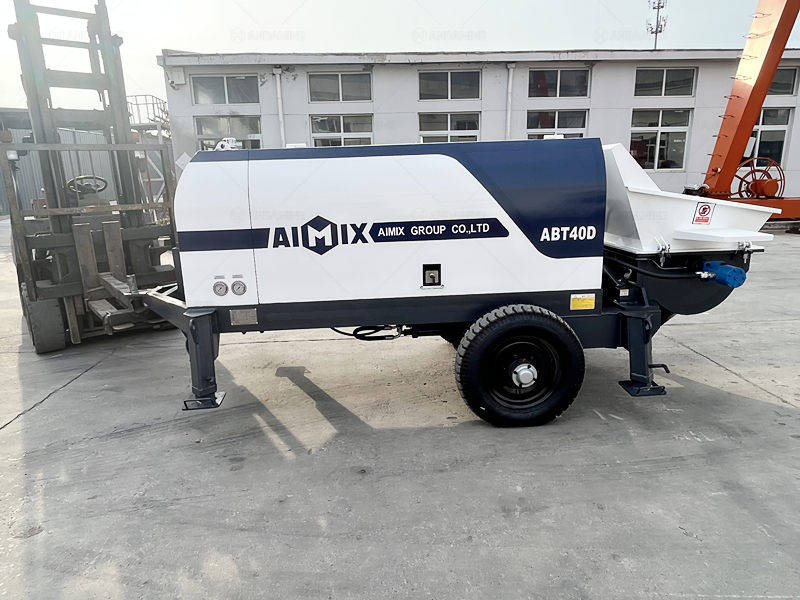
The fundamental production relationship between a trailer concrete pump and a concrete mixer with pump creates a complementary output system that maximizes overall concrete placement efficiency while providing operational redundancy that safeguards against production interruptions on large-volume projects. A small concrete pump machine in trailer configuration typically offers substantially greater output capacity than a concrete mixer with pump, with pumping rates often reaching 60-100 cubic meters per hour compared to the 20-40 cubic meter hourly output typical of combination units, creating a natural production hierarchy where the trailer concrete pump handles the primary high-volume placement while the concrete mixer with pump provides supplementary capacity. This production relationship enables large projects to maintain aggressive placement schedules without the extreme cost of deploying multiple high-capacity concrete pumping machine units, instead utilizing the more economical concrete mixer with pump to augment production during peak demand periods while serving primary roles during lower-volume phases. The concrete mixer with pump further supports the trailer concrete pump operation by providing emergency concrete supply when ready-mix deliveries experience delays, preventing costly work stoppages that would otherwise idle the larger concrete pumping machine and its operating crew. Additionally, the autonomous concrete production capability of the concrete mixer with pump enables just-in-time material supply for the trailer concrete pump during critical placement sequences where continuous operation is essential for structural integrity, such as in massive pours where cold joints must be avoided despite any disruptions in commercial concrete delivery. This production symbiosis creates a resilient concrete placement system that maintains operational momentum through the inevitable logistical challenges of large projects, demonstrating how the strategic combination of different equipment types delivers performance that exceeds the capabilities of either system operating independently.
Strategic Placement Coordination and Reach Extension
The coordinated deployment of a trailer concrete pump and concrete mixer with pump creates a comprehensive placement network that maximizes coverage across large project sites while providing flexibility to address constantly changing placement requirements. The trailer concrete pump typically serves as the primary placement workhorse with its superior reach and volume capability, positioned to handle the major structural elements and large-area placements that define large-project concrete work, while the concrete mixer with pump operates as a mobile placement unit that addresses secondary requirements, difficult-to-access areas, and specialized applications. This coordinated approach enables project managers to optimize equipment utilization by assigning the trailer concrete pump to high-volume, high-reach applications where its capabilities deliver maximum efficiency, while deploying the concrete mixer with pump to smaller, scattered placements that would represent inefficient use of the larger concrete pumping machine. The mobility advantage of the concrete mixer with pump further enhances this coordination by enabling rapid repositioning to address emerging placement needs without disrupting the primary operation of the trailer concrete pump, creating a responsive placement system that adapts to the evolving requirements of complex projects. Additionally, the concrete mixer with pump can extend the effective service area of the trailer concrete pump by supplying concrete to locations beyond the reach of the primary equipment, either through direct placement in adjacent areas or by feeding secondary distribution systems that further extend placement capability across extensive project sites. This coordinated placement strategy demonstrates how the combination of a high-capacity trailer concrete pump and a versatile concrete mixer with pump creates a comprehensive concrete placement solution that delivers both the scale necessary for major projects and the flexibility required to address the diverse placement challenges that inevitably arise during complex construction operations.
Operational Redundancy and Risk Mitigation
The parallel operation of a trailer concrete pump and concrete mixer with pump establishes valuable operational redundancy that significantly reduces project risk by ensuring concrete placement continuity despite equipment malfunctions, supply chain disruptions, or unexpected site conditions that could otherwise cripple project schedules. In a conventional large-project setup relying solely on a high-capacity concrete pumping machine, any mechanical failure immediately halts all concrete placement activities, creating potentially massive schedule impacts and cost overruns as crews sit idle while repairs are completed. The presence of a concrete mixer with pump as a supporting element creates a safety net that maintains at least partial placement capability during such disruptions, allowing critical concrete operations to continue even if at reduced capacity while the primary trailer concrete pump undergoes repair. This redundancy extends beyond mechanical reliability to encompass concrete supply assurance, as the concrete mixer with pump can produce concrete independently from the ready-mix supply chain that supports the trailer concrete pump, maintaining placement operations during delivery delays, batching plant issues, or transportation problems that would otherwise starve the primary concrete pumping machine of material. Additionally, the concrete mixer with pump provides application redundancy for specialized concrete requirements, able to produce small batches of non-standard mixes for specific applications without disrupting the high-volume operation of the trailer concrete pump or requiring separate arrangements with ready-mix suppliers. This risk mitigation capability demonstrates how the modest additional investment in a supporting concrete mixer with pump delivers disproportionate value by protecting the substantial financial investment represented by large-project concrete operations against the numerous potential disruptions that threaten project timelines and budgets, creating a resilient operational approach that maintains progress despite the uncertainties inherent in complex construction environments.
Logistical Flexibility and Supply Chain Optimization
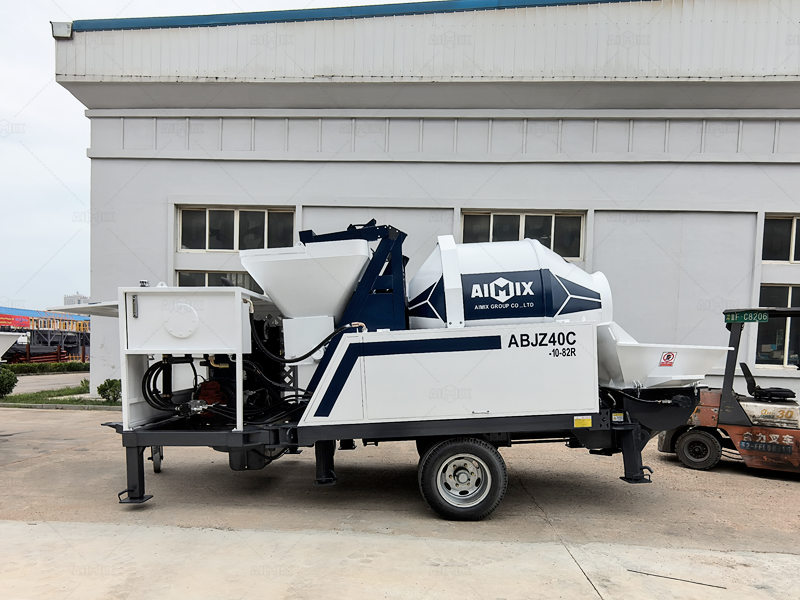
The combined operation of a trailer concrete pump and concrete mixer with pump creates logistical flexibility that optimizes concrete supply chain management on large projects, reducing dependency on external suppliers while enhancing responsiveness to changing project requirements. The trailer concrete pump typically operates with conventional ready-mix concrete supply, benefiting from the economies of scale and consistent quality provided by professional batching plants, while the concrete mixer with pump introduces an independent supply capability that complements this primary source. This dual-source approach enables project managers to optimize concrete procurement by utilizing commercial ready-mix for the high-volume requirements serviced by the trailer concrete pump while employing the concrete mixer with pump for smaller, specialized, or time-critical placements where commercial delivery would be inefficient or unreliable. The independent production capability of the concrete mixer with pump further enhances logistical flexibility by enabling just-in-time concrete production for urgent requirements that cannot wait for scheduled deliveries, such as emergency repairs, unexpected additional placements, or last-minute design changes that require immediate concrete placement. Additionally, the concrete mixer with pump can produce concrete during off-hours when commercial batching plants may be closed, extending productive work windows beyond standard delivery availability and potentially accelerating project schedules without premium charges for after-hours commercial concrete supply. This logistical advantage demonstrates how the combination of a trailer concrete pump with external supply and a concrete mixer with pump with independent production capability creates a comprehensive concrete management system that delivers both the economic efficiency of high-volume commercial supply and the operational flexibility of on-site production, optimizing the concrete supply chain for large projects where both scale and responsiveness are essential for successful outcomes.
Economic Efficiency and Resource Optimization
The economic relationship between a trailer concrete pump and concrete mixer with pump creates significant cost advantages on large projects by optimizing equipment utilization, reducing idle time, and minimizing the premium expenses associated with conventional approaches to concrete placement. The substantial capital and operating costs of a high-capacity trailer concrete pump create economic pressure for continuous operation at or near full capacity to justify the investment, while the more modest economics of a concrete mixer with pump allow efficient operation across a wider range of utilization levels without significant financial penalty. This economic compatibility enables project managers to deploy the trailer concrete pump for the high-volume applications where its capabilities deliver maximum return on investment, while utilizing the concrete mixer with pump for lower-volume tasks that would represent inefficient use of the larger equipment. The combination further enhances economic efficiency by reducing the need for multiple high-capacity concrete pumping machine units to handle peak placement requirements, instead utilizing the more economical concrete mixer with pump to supplement capacity during demand spikes while serving primary roles during normal operation. Additionally, the autonomous capability of the concrete mixer with pump reduces costs associated with concrete waste by enabling production of exact quantities needed for smaller placements, contrasting with the minimum load requirements of commercial ready-mix that often result in wasted material when supplying the trailer concrete pump for small or irregular placement quantities. This economic optimization demonstrates how the strategic combination of different equipment types creates a concrete placement system that maximizes return on investment by matching equipment capabilities to specific application requirements, delivering the comprehensive placement capacity necessary for large projects without the excessive costs associated with uniform high-capacity equipment deployment that would represent overinvestment for significant portions of the project timeline.
Adaptive Operation and Project Phase Support
The versatile interaction between a trailer concrete pump and concrete mixer with pump enables adaptive operational approaches that efficiently support the evolving requirements of large projects across different construction phases, from initial site work through to finishing operations. During early project phases featuring scattered foundations, utility placements, and site infrastructure, the concrete mixer with pump typically assumes the primary placement role with its mobility and independent operation capability, while the trailer concrete pump may be deployed selectively for larger elements or held in reserve for the main structural phases where its capabilities deliver maximum value. As projects transition to major structural phases with concentrated high-volume placements, the operational emphasis shifts to the trailer concrete pump as the primary placement system, with the concrete mixer with pump transitioning to a support role handling secondary elements, supplemental placements, and detail work that continues alongside the major structural operations. This phased approach continues through project completion, with the concrete mixer with pump increasingly assuming finishing responsibilities such as slabs, paving, and architectural elements as the trailer concrete pump completes its work on major structures and potentially moves to subsequent projects. This adaptive operational relationship maximizes equipment utilization throughout the project lifecycle while ensuring that appropriate capabilities are available for each construction phase without the inefficiency of deploying excessive capacity during lower-demand periods or insufficient capability during peak requirements. The demonstrated flexibility shows how the combination of a trailer concrete pump and concrete mixer with pump creates a versatile concrete placement partnership that efficiently adapts to the changing demands of complex projects, delivering appropriate capabilities for each project phase while maintaining operational continuity across the entire construction timeline through seamless transition between primary and support roles based on project requirements.