
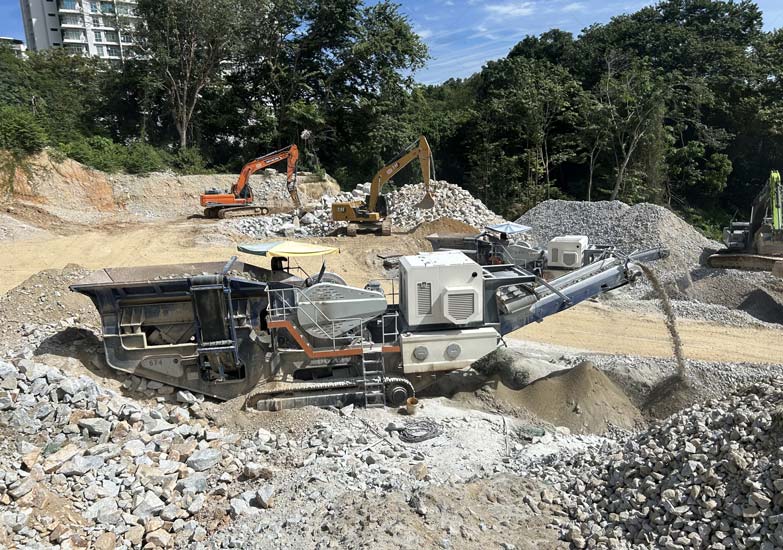
The mining industry across Latin America faces a relentless challenge: processing some of the world’s most highly abrasive ores. From the hard, siliceous copper porphyries of the Andes to the iron-rich itabirites of Brazil, equipment degradation is the primary enemy of productivity and profitability. This article explores a holistic approach to wear-resistant system design, a critical factor that ultimately influences the long-term stone crusher plant(planta chancadora) operational costs far more significantly than the initial price of stone crusher equipment. By integrating material science, strategic design, and proactive maintenance, plants can achieve unprecedented levels of uptime and efficiency.

Understanding the Abrasion Challenge in Latin American Geology
Regional ores often possess high silica (SiO2) content, extreme hardness, and sharp, angular particle shapes. This combination acts like sandpaper on crushing components, leading to rapid wear of liners, mantles, jaws, and impact elements. A system designed for less demanding materials will fail prematurely in these environments, causing excessive downtime for component changes and eroding profit margins through constant replacement part costs.
Key Wear Zones in the Crushing Circuit
A targeted defense requires identifying the battlefronts. Primary gyratory and jaw crushers experience intense abrasive wear in the crushing chamber. Secondary and tertiary cone crushers see wear on mantles and concaves. For applications like a limestone crusher(trituradora de piedra caliza), wear is more predictable, but for abrasive metallic ores or volcanic rock, the rate is exponential. Horizontal shaft impactors, sometimes used in certain circuits, can see rotor and hammer wear that is catastrophic if not properly specified.
Pillars of a Holistic Wear-Resistant System Design
Moving beyond simply selecting “hard” materials, a system design integrates multiple layers of protection and strategy.
1. Material Selection and Metallurgy
This is the first line of defense. Options include:
- Manganese Steel (Hadfield): Tough and work-hardening, excellent for jaw and cone crusher liners under high-impact conditions.
- High-Chrome White Iron: Extremely hard and abrasion-resistant, ideal for blow bars in impact crushers or vertical shaft impactor (VSI) tips. It is more brittle but offers superior life in purely abrasive settings.
- Composite Materials & Ceramics: Using ceramic inserts or wear panels in high-wear areas of chutes, feed plates, and skirts can extend life by factors of 5 to 10 compared to standard steel.
The choice is a calculated trade-off between hardness, toughness, and impact resistance, tailored to each machine’s role in the circuit.
2. Crusher Chamber Geometry and Operational Parameters
Advanced crusher designs allow for chamber optimization. A correctly profiled chamber ensures proper nip angles and stone-on-stone crushing where possible, reducing wear on the metal components. Additionally, operating parameters like closed-side setting (CSS), feed rate, and crusher speed must be optimized. Running a crusher outside its designed parameters accelerates wear dramatically, a costly mistake regardless of the initial price of stone crusher(precio de trituradoras de piedra) investment.
3. System Integration and Feed Control
Wear management begins before material enters the crusher. Effective scalping removes fine, abrasive material that bypasses the crushing action and simply wears down conveyors and components. Ensuring a consistent, well-graded feed—not just a dump of run-of-mine ore—prevents cavity flooding or erratic operation, both of which increase wear. Proper chute design with wear-lined impact zones and correct drop heights minimizes particle degradation before the primary crusher.
Economic Justification: Total Cost of Ownership
The capital expenditure (CAPEX) focus, especially on the price of stone crusher units, must shift to operational expenditure (OPEX) and total cost of ownership. A cheaper, less robust crusher or lining system will have a much higher lifetime cost due to frequent downtime, massive labor for changes, and continuous parts spending. The economic argument for a premium wear system is clear: maximizing the hours of quality production between maintenance stops.
Case Considerations: From Hard Rock to Recycled Aggregates
While designed for abrasive ores, these principles apply across sectors. A concrete crusher(trituradora de concreto) processing demolition debris faces extreme abrasion from rebar-exposed concrete and brick. Similarly, a limestone crusher in a Caribbean cement plant, while dealing with less abrasive material, still benefits from a systematic wear plan to achieve 24/7 production goals. The design philosophy is scalable and adaptable.
Maintenance as a Design Function
A wear-resistant system is not static. Predictive maintenance, using wear monitoring technology like laser scanning of liners, allows for planned change-outs instead of emergency shutdowns. Standardizing liner designs across multiple crushers in a stone crusher plant reduces inventory complexity. Furthermore, designing for quick and safe liner replacement—with proper lifting points and tool access—reduces downtime from days to hours.
Conclusion: Building for Resilience
For Latin American crushing plants targeting highly abrasive ores, wear resistance is the cornerstone of operational success. It requires a systemic philosophy that encompasses intelligent material selection, crusher optimization, holistic plant design, and data-driven maintenance. By investing in this integrated approach from the outset, operators secure not just equipment, but the relentless throughput required to thrive in competitive global markets. The true cost is measured not in the price of the machine, but in the tons of ore processed per dollar of wear part consumed.