
The traditional concrete production process is built around a series of separated stages. Materials are measured in a batching plant, blended into concrete through a mixing system, transported by trucks, and finally delivered to the placement area through pumps or other conveying equipment. This established workflow has supported construction development for decades, but it also introduces additional coordination requirements, transportation dependency, and potential points of delay.
As construction environments become more demanding, especially in remote areas, urban projects with limited space, and fast-track infrastructure development, contractors are searching for more integrated solutions. The emergence of portable concrete batching plant and pump systems represents a shift from segmented concrete handling toward a more streamlined approach. By combining concrete production and pumping capabilities into one mobile platform, these systems remove the traditional middle step of external transportation and create a more direct path from raw materials to final placement.
This new approach is not simply about combining two machines. It represents a reconfiguration of concrete logistics, reducing unnecessary movement, improving operational control, and creating a more adaptable solution for modern construction requirements.
How Integrated Batching and Pumping Changes the Traditional Concrete Workflow
Removing the Transportation Gap Between Production and Placement
In conventional concrete operations, the journey from batching plant to construction point often depends on multiple pieces of equipment. After concrete production, mixer trucks must transport the material to the pumping location. This intermediate stage introduces several variables, including traffic conditions, travel distance, waiting time, and concrete quality changes during transportation.
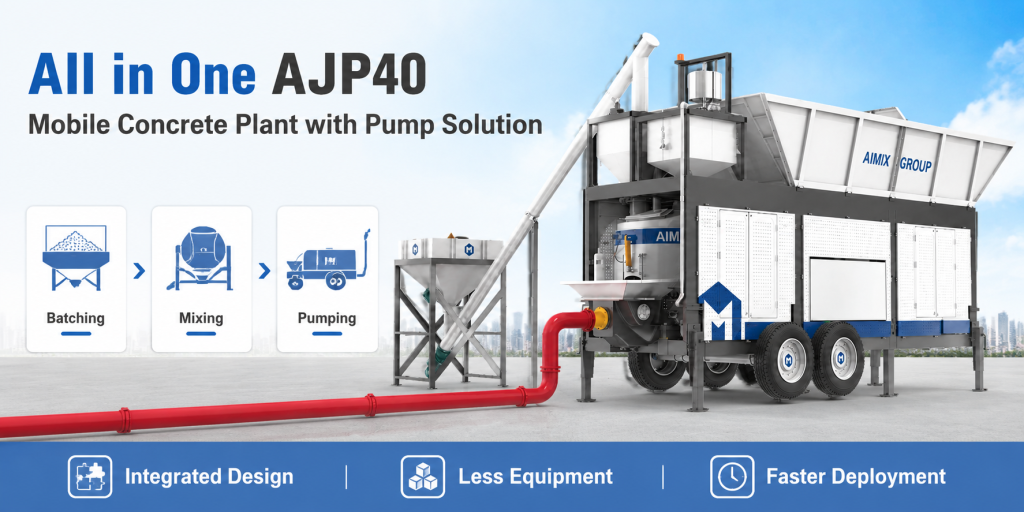
A portable batching plant and pump solution eliminates this logistical gap. Concrete can be produced and delivered directly through the pumping system without relying on external transit equipment. The process becomes more linear: raw materials enter the system, concrete is produced, and the final mixture moves directly toward the construction area.
This streamlined material flow creates a more efficient operational rhythm. Fewer handovers mean fewer opportunities for disruption.
Creating a More Flexible Concrete Supply System
Construction sites are rarely static environments. Road projects expand gradually, residential developments move between sections, and remote projects often lack permanent infrastructure. Traditional concrete supply systems may require fixed batching stations or long-distance transportation arrangements, limiting flexibility.
Portable integrated systems introduce a different operational philosophy. Their compact configuration allows contractors to establish concrete production closer to the actual working zone.
Reduced Dependence on External Concrete Transportation
Mixer trucks remain valuable for many large-scale applications, but they can become inefficient when projects are located far from stationary concrete batching plants or involve difficult access conditions. Long transportation routes increase fuel consumption, scheduling complexity, and the risk of delays.
By producing concrete directly at the jobsite, integrated batching and pumping equipment creates a localized supply chain. This is particularly beneficial for projects where accessibility and timing are critical.
Adaptability for Multiple Construction Scenarios
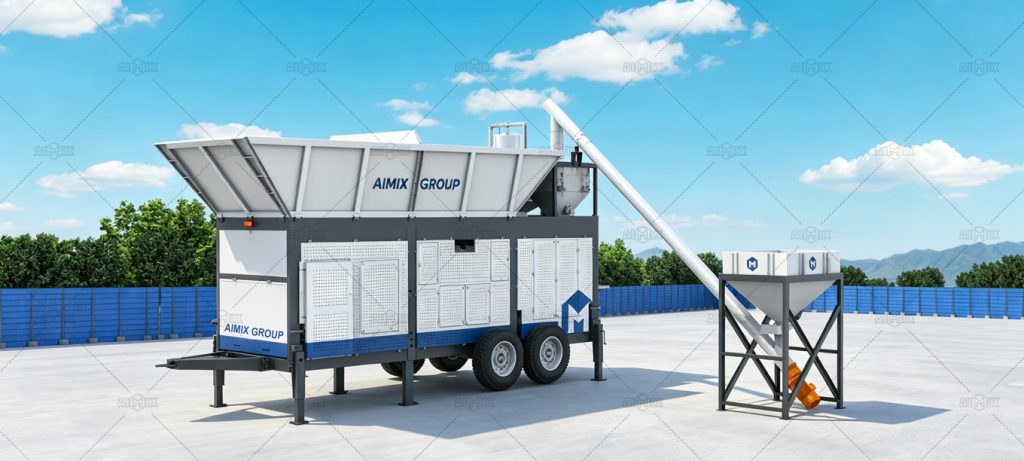
A portable design allows the equipment to serve different applications without requiring extensive site modification. From foundation construction and rural infrastructure to repair projects and small-scale commercial development, the system can adapt to changing project demands.
The Engineering Advantages Behind Portable Batching Plant and Pump Solutions
Improved Control Over Concrete Quality
Concrete performance depends heavily on consistency. Variations in water content, aggregate proportions, mixing time, or transportation duration can influence strength development and workability.
An integrated mobile batching plant for sale with pump allows operators to maintain closer control over the entire production process. Materials are accurately measured, mixed, and delivered within a shorter timeframe. This reduces the uncertainty associated with external transportation and extended waiting periods.
The result is a more stable concrete flow with better preservation of designed properties. For applications requiring precise performance, such as structural foundations, bridges, and demanding infrastructure projects, this control mechanism provides significant value.
Optimizing Space and Site Organization
Construction sites often operate under spatial constraints. Urban projects may have limited working areas, while remote projects may lack prepared foundations or large equipment zones.
Traditional concrete production arrangements require separate areas for batching, transportation access, and pumping operations. An integrated portable system compresses these requirements into a smaller operational footprint.
Compact Configuration for Restricted Sites
The combination of batching, mixing, and pumping functions reduces equipment separation. Contractors can organize the site with fewer machines occupying valuable space.
This compactness also improves workflow visibility. Operators can monitor production and delivery from a centralized location rather than coordinating multiple independent systems.
Faster Installation and Project Mobilization
Time spent preparing equipment can directly affect project schedules. Portable solutions are designed around simplified deployment, allowing construction teams to begin concrete production sooner.
For temporary projects or locations where equipment relocation is necessary, faster mobilization becomes a strategic advantage rather than merely a convenience.
Why Integrated Concrete Flow Represents the Future of Flexible Construction
Reducing Operational Complexity Through System Integration
Modern construction increasingly values simplicity. Every additional process step introduces another layer of coordination, maintenance, and potential failure.
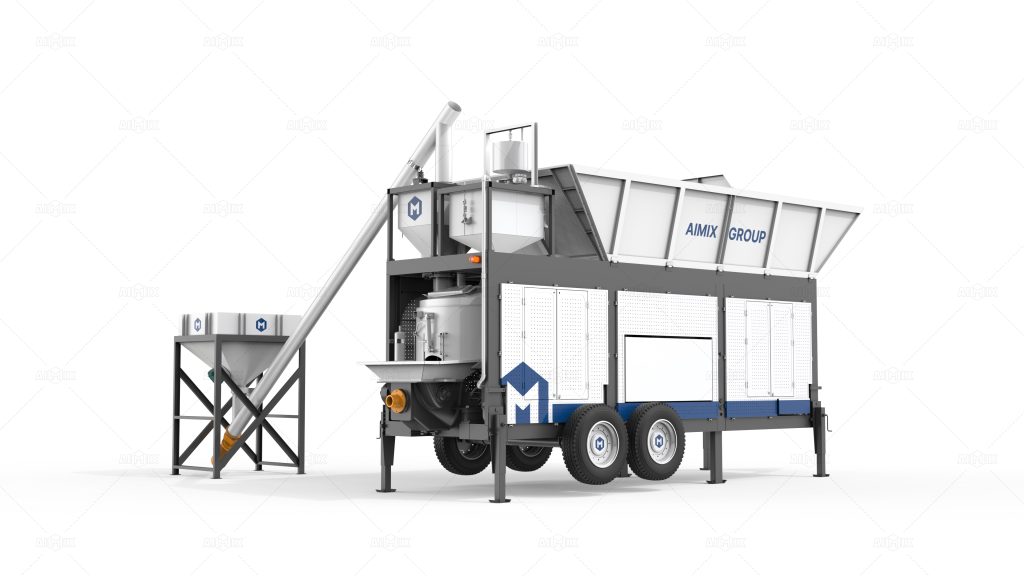
A portable batching plant for sale and pump system reduces this complexity by integrating several functions into one coordinated platform. Operators manage fewer interfaces, transportation requirements decrease, and production decisions can be adjusted more quickly according to site conditions.
This integration reflects a broader industry movement toward intelligent construction equipment. Machines are no longer evaluated only by individual capacity but by how effectively they support the entire construction ecosystem.
Supporting Faster and More Sustainable Construction Practices
Efficiency is becoming closely connected with sustainability. Reducing unnecessary transportation lowers fuel consumption, decreases vehicle movement around the construction site, and minimizes idle periods.
The direct concrete flow created by integrated systems contributes to a more resource-efficient operation. Less equipment coordination means fewer operational interruptions and improved utilization of labor and machinery.
For contractors facing increasingly competitive project environments, these advantages translate into stronger control over cost, schedule, and performance.
A New Model for Concrete Delivery Efficiency
The evolution from separate batching, transportation, and pumping stages toward an integrated concrete flow system represents more than equipment innovation. It reflects a change in how construction materials are managed.
Portable batching plant and pump solutions provide a direct connection between production and placement. They reduce logistical friction, improve quality consistency, and create greater flexibility for challenging construction conditions.
The future of concrete delivery will not simply depend on producing more concrete. It will depend on moving concrete smarter. By removing unnecessary steps between batching and pumping, integrated solutions create a more efficient pathway from material preparation to final application, supporting faster, cleaner, and more adaptable construction operations.