
Malaysia’s construction industry is experiencing continuous growth in infrastructure, industrial development, urban expansion, and commercial projects. However, as project locations become more distributed—from dense city areas to remote construction zones—contractors face increasing pressure to control concrete supply costs. One of the major hidden expenses is concrete transportation, especially when ready-mix concrete must travel long distances between batching facilities and job sites.
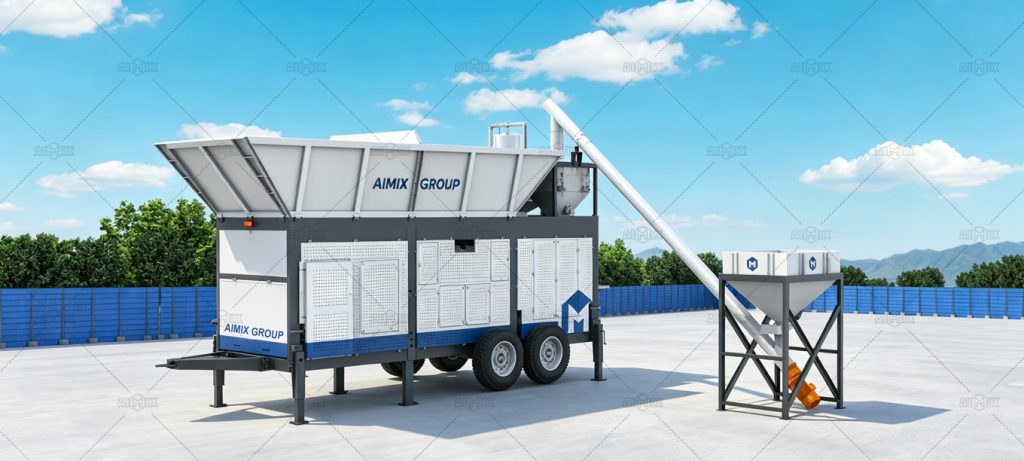
A mobile batching plant with mini concrete pump provides an integrated approach by combining concrete production and pumping functions within one efficient system. Instead of depending on external concrete suppliers and multiple transportation stages, contractors can produce and deliver concrete directly at the project location. This solution helps reduce logistics costs, improve construction efficiency, and create a more flexible concrete supply strategy for Malaysian projects.
Why Concrete Transportation Costs Are a Challenge for Malaysian Construction Projects
Long Delivery Distances Increase Project Expenses
In many Malaysian construction projects, concrete transportation represents a significant portion of operational costs. When a project site is far away from commercial ready mix plants in Malaysia, every cubic meter of concrete requires additional logistics planning, fuel consumption, and delivery coordination.
The situation becomes more complicated in areas with heavy traffic congestion, limited road access, or rapidly developing regions where nearby concrete suppliers may not be available. A transit mixer may spend more time traveling than unloading. This creates a chain reaction: higher fuel usage, increased vehicle depreciation, longer waiting periods, and reduced delivery efficiency.
For contractors managing large-scale projects, these small inefficiencies accumulate quickly. Transportation expenses that appear minor during planning can become substantial budget pressures throughout the construction period.
Concrete Quality Risks During Transportation
Besides increasing costs, long-distance concrete transportation can also affect concrete performance. Fresh concrete has a limited working time before its properties begin to change. Extended travel time may influence slump consistency, workability, and placement efficiency.
For projects requiring strict quality control, relying entirely on distant concrete suppliers introduces additional variables. Weather conditions, traffic delays, and delivery scheduling issues can all affect the final construction process.
By producing concrete closer to the point of use, contractors can reduce unnecessary transportation exposure and maintain better control over concrete freshness and consistency.
How Concrete Pump Batching Plants Reduce Transportation Costs
Integrated Batching and Pumping Eliminates Extra Logistics Steps
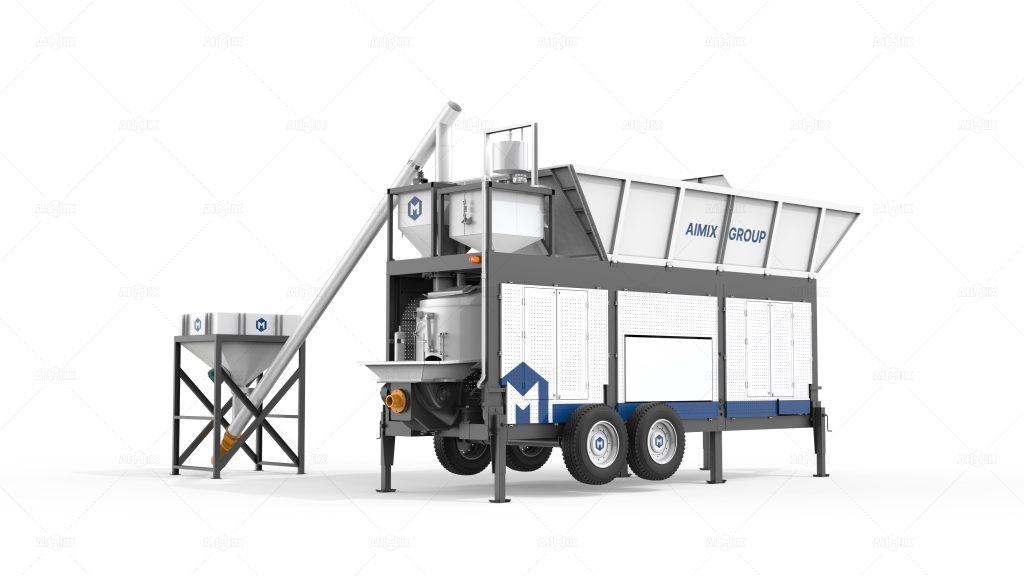
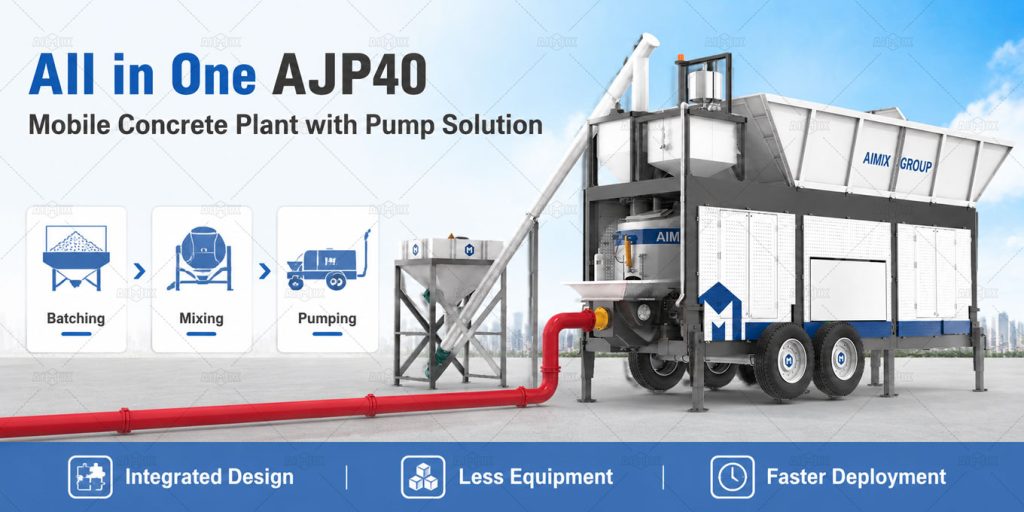
A concrete pump batching plant combines concrete mixing and concrete pumping functions into one coordinated solution. The system can batch raw materials, produce fresh concrete, and deliver it directly through a pumping mechanism without requiring multiple independent machines.
This integrated workflow reduces the need for frequent concrete truck movements between suppliers and construction sites. Instead of transporting finished concrete over long distances, contractors can bring production closer to the actual construction area.
The reduction in transportation requirements creates a more economical construction model. Fewer delivery vehicles are needed, fuel consumption decreases, and project teams gain greater control over daily concrete supply.
Reducing Dependence on External Ready-Mix Suppliers
Traditional construction methods often require contractors to purchase ready-mix concrete from third-party suppliers. While this approach can work for small projects, it may become expensive for large projects requiring continuous concrete output.
A mobile batching plant with pump allows contractors to establish an independent concrete production point. This provides greater autonomy over production schedules, material planning, and concrete availability.
For Malaysian projects located away from commercial concrete plants, this independence can significantly improve cost efficiency. Contractors no longer need to absorb additional supplier transportation charges or adjust construction schedules according to external delivery availability.
Key Advantages of Using Concrete Pump Batching Plants in Malaysia
Improved Construction Efficiency Through Onsite Production
One of the biggest advantages of an integrated concrete pumping solution is faster material delivery. Concrete moves directly from production to placement, creating a shorter and more streamlined workflow.
This is particularly valuable for projects such as high-rise buildings, infrastructure developments, industrial facilities, and large foundations where continuous concrete supply is essential.
With reduced waiting time between mixing and placement, construction teams can maintain smoother operations. Workers spend less time coordinating deliveries and more time focusing on actual construction activities.
Better Adaptability for Different Malaysian Project Locations
Malaysia’s construction environment includes diverse project conditions. Urban developments often face limited working space, while rural projects may encounter challenges related to transportation accessibility.
A concrete pump batching plant provides a flexible solution for both scenarios. Its compact structure and integrated design allow contractors to establish production capability in locations where traditional concrete supply methods may be inefficient.
This adaptability is especially useful for infrastructure projects such as bridges, highways, ports, and remote industrial facilities where maintaining a reliable concrete supply is critical.
Lower Overall Operational Costs
Cost reduction does not come from one single factor. Instead, it results from multiple efficiency improvements working together. Reduced transportation distance, lower fuel consumption, fewer delivery vehicles, and improved labor utilization all contribute to better project economics.
Compared with continuously purchasing transported ready-mix concrete, owning or deploying a batching plant with concrete pump in Malaysia can provide long-term financial advantages for contractors handling repeated concrete-intensive projects.
Choosing the Right Concrete Pump Batching Plant for Malaysian Projects
Consider Production Capacity and Project Requirements
Different projects require different concrete output levels. Before selecting equipment, contractors should evaluate daily concrete demand, construction schedule, available site space, and required pumping distance.
A suitable concrete pump batching plant should match the project’s production requirements without creating unnecessary investment pressure. The right capacity ensures efficient operation while avoiding equipment underutilization.
Evaluate Mobility and Installation Flexibility
For contractors working on multiple projects, mobility is an important consideration. A plant that can be installed quickly, relocated efficiently, and adapted to changing site conditions provides additional business flexibility.
Modern integrated concrete solutions are designed with modular structures and simplified installation processes. These characteristics allow contractors to respond faster to new construction opportunities while reducing equipment downtime.
Focus on Long-Term Construction Value
A concrete pump batching plant should be viewed as a productivity investment rather than only a concrete production machine. Its value extends beyond daily output by improving supply reliability, reducing logistics complexity, and supporting more predictable project execution.
For Malaysian contractors facing rising transportation expenses and increasing project demands, integrated concrete production and pumping solutions offer a practical pathway toward higher efficiency. By reducing unnecessary concrete movement and bringing production closer to construction activities, these plants help create a more economical, responsive, and competitive construction operation.
“`