
The AS-MK24 self-loading concrete mixer is designed for projects that need both flexible transportation and a reliable concrete supply. With a nominal production capacity of 24 m³/h, it can produce fresh concrete directly at or near the construction site while moving between different work areas. This combination is valuable when a conventional stationary batching plant would require additional transportation equipment or when site conditions make frequent relocation necessary.
Unlike a conventional mixer that mainly handles mixing and transportation, a self-loading concrete mixer integrates aggregate loading, weighing, mixing, and discharge into one mobile unit. The AS-MK24(AS-MK24 auto hormigonera) therefore does not achieve mobility simply by making the machine smaller. Its overall configuration is designed to allow concrete production and transportation to take place within the same equipment workflow.
For contractors working on roads, houses, rural infrastructure, and other dispersed projects, this balance between mobility and output can reduce unnecessary logistics and make daily concrete production more adaptable.
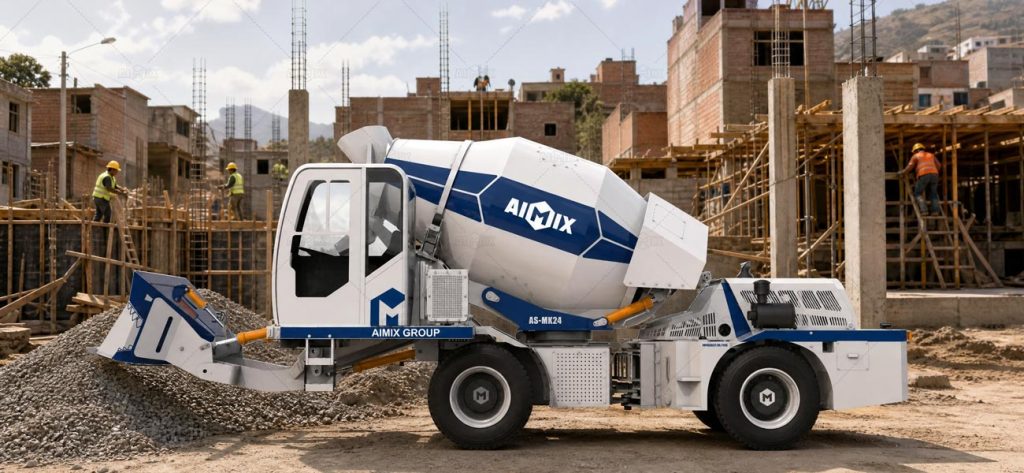
How Does the AS-MK24 Maintain High Mobility?
Mobility is one of the main advantages of this type of equipment. A construction site may include multiple pouring locations, narrow access roads, uneven terrain, or temporary work zones. Moving a complete concrete production system between these locations can otherwise require considerable time and additional machinery.
Integrated Functions Reduce Equipment Requirements
The AS-MK24 combines several operations in one machine. The operator can load aggregates, weigh materials, mix the concrete, and transport the finished batch without relying on a separate wheel loader and stationary mixer for every production cycle.
This integrated configuration reduces the number of machines that need to be coordinated on site. It can also simplify material handling when the available working area is limited.
Designed for Frequent Relocation
A mobile self-loading concrete mixer(hormigonera autocargante) needs to do more than move from one location to another. It must be able to perform concrete production after relocation without creating a complicated setup process. This makes mobility particularly useful for projects where concrete demand is distributed across several work areas.
For example, a contractor may produce concrete near one foundation in the morning and move to another construction section later in the day. The same machine can continue serving the project without establishing a new stationary production line.
How Does It Achieve 24 m³/h Production?
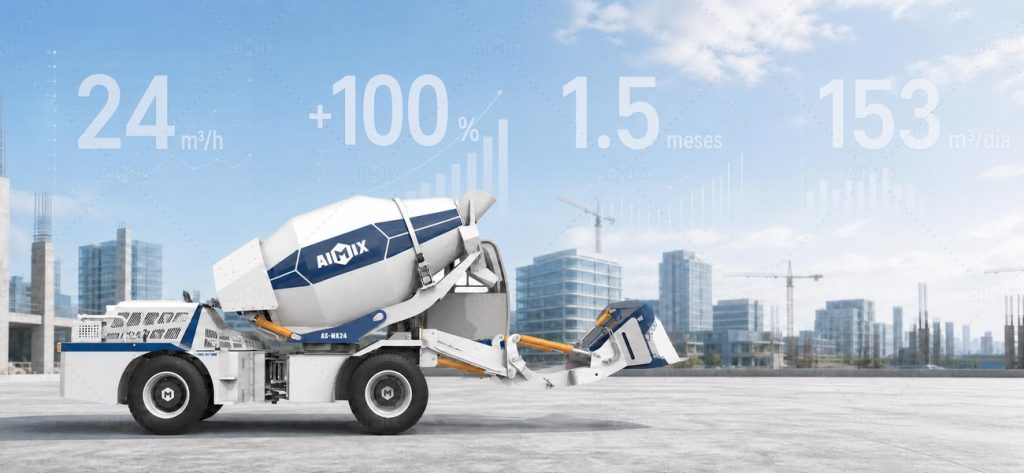
High mobility does not necessarily mean sacrificing production capacity. The AS-MK24 is rated at 24 m³/h, giving contractors a practical production level for many small and medium-sized construction applications.
Continuous Production Within a Mobile Workflow
The key advantage is that the production process remains integrated. Materials can be loaded and proportioned before mixing, allowing the operator to prepare successive batches according to the project’s requirements.
For applications that do not require the output of a large stationary batching plant, 24 m³/h can provide a useful balance. The contractor can maintain a steady concrete supply without investing in a larger production system that may be difficult to relocate.
Matching Output to Actual Site Demand
Equipment capacity should always be evaluated against actual concrete consumption. A machine with a very high theoretical output may not improve productivity if the site cannot continuously place that volume.
The 24 m³/h capacity of the AS-MK24 can be suitable when concrete is required at several locations but daily demand remains moderate. This helps align production with the construction schedule instead of creating excessive unused capacity.
Why Is Mobility Important for Concrete Production?
Transportation distance can directly influence concrete delivery efficiency. Fresh concrete must reach the placement point within the appropriate working period, while excessive transportation can increase waiting time and make scheduling more difficult.
Reducing the Distance Between Production and Placement
A self-loading concrete mixer can move closer to the point where concrete is needed. Instead of transporting every batch from a distant commercial plant, contractors can establish a temporary production point within the project area.
This is especially useful for rural construction, road projects, agricultural infrastructure, and developments with multiple separated structures.
Adapting to Changing Construction Locations
Construction sequences frequently change. Excavation, foundation work, columns, slabs, and road sections may require concrete at different locations and times. A mobile production solution allows the concrete supply to follow the project rather than forcing the project to remain close to a fixed production point.
What Affects the Price of a Self-Loading Concrete Mixer?
When comparing the price of self-loading concrete mixer(precio de autohormigonera) equipment, buyers should look beyond the initial purchase price. The overall investment depends on capacity, configuration, weighing and mixing systems, mobility requirements, shipping conditions, and after-sales support.
- Production capacity and mixer volume
- Loading and weighing configuration
- Drive and mobility system
- Required spare parts and maintenance support
- Transportation and delivery costs
- Project location and operating conditions
A lower purchase price does not automatically represent lower project costs. Contractors should also consider whether the machine can replace separate loading, mixing, and transportation equipment. If one mobile unit can perform several functions, the comparison should include potential savings in labor, equipment coordination, and site logistics.
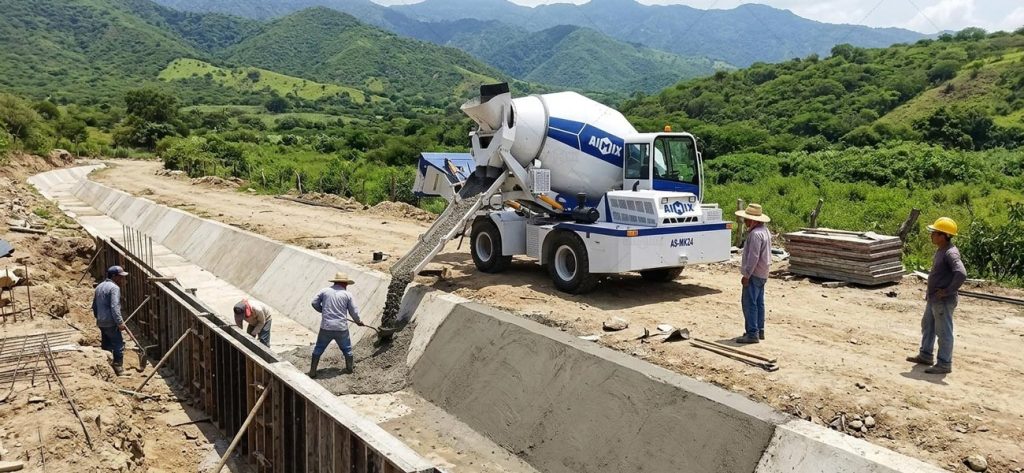
Is a Self-Loading Concrete Mixer Suitable for Peru?
The self-loading concrete mixer in Peru can be particularly relevant for projects where construction sites are dispersed or access conditions vary significantly. Road construction, residential development, agricultural infrastructure, and projects in remote areas may require concrete to be produced away from conventional batching facilities.
When evaluating a self-loading concrete mixer in Peru(autohormigonera en Perú), contractors should consider road access, project elevation, local material availability, required daily output, and the distance between aggregate storage and pouring locations. These factors can have a greater influence on productivity than nominal capacity alone.
Choosing Capacity According to the Project
Not every project needs a large batching plant. If concrete demand is moderate but work locations change frequently, a 24 m³/h mobile configuration can provide a more flexible solution. The objective is to maintain enough production capacity while preserving the ability to move efficiently around the site.
How Should Contractors Evaluate the AS-MK24?
The best way to evaluate the AS-MK24 self-loading concrete mixer is to calculate the complete concrete production cycle rather than focusing only on its 24 m³/h rating. Consider how many cubic meters are required each day, how far conventional concrete would need to travel, how many separate machines would otherwise be needed, and how frequently the production point must move.
For contractors comparing the price of self-loading concrete mixer options, these operational factors provide a more realistic basis for investment decisions. The AS-MK24 can be particularly attractive when mobility, integrated operation, and moderate production capacity are all required within the same project.
When selecting a self-loading concrete mixer, the most suitable machine is ultimately the one that matches the project’s production rhythm and site conditions. For applications requiring approximately 24 m³/h while maintaining the flexibility to relocate between work areas, the AS-MK24 provides a practical combination of mobile concrete production and integrated material handling.