
In today’s fast-moving construction industry, efficiency, mobility, and cost control have become essential requirements for contractors and developers. This is why mobile concrete batching plant manufacturers play a crucial role in delivering integrated concrete production solutions that can move directly from factory to job site with minimal setup time. Unlike traditional stationary plants, mobile systems are designed for flexibility, allowing concrete to be produced exactly where it is needed, reducing transportation distance and improving project efficiency.
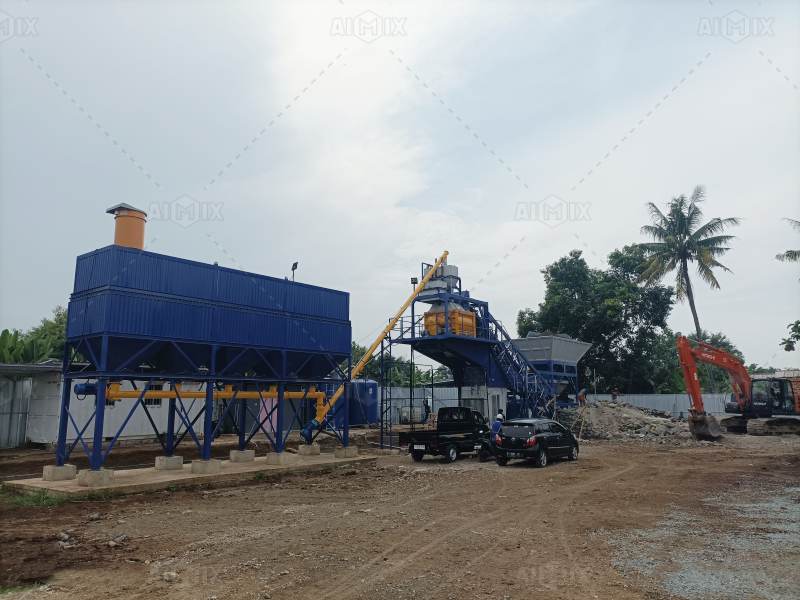
Engineering at the Factory: Where Performance Begins
The process starts in the manufacturing factory, where engineers design and assemble modular components of the batching plant. These include aggregate storage bins, weighing systems, mixing units, conveyor systems, cement silos, and centralized control cabins. Each component is engineered to meet strict performance and durability standards, ensuring reliable operation under different construction environments.
Leading mobile concrete batching plant manufacturers invest heavily in precision engineering and automation integration. Advanced CAD design, structural simulation, and factory testing ensure that every unit can withstand long-term operation, heavy workloads, and frequent relocation. Before shipment, each plant is fully tested to verify batching accuracy, mixing uniformity, and system stability.
This factory-level quality control is critical because mobile batching plants must perform reliably immediately after installation, often in remote or high-pressure construction environments where downtime is costly.
Global Logistics: Moving Plants from Factory to Job Site
One of the defining advantages of mobile batching systems is transportation efficiency. Unlike traditional stationary plants that require extensive civil foundation work, mobile systems are designed for quick disassembly and transport. Components are often containerized or mounted on trailer frames, making global shipping more efficient.
This global mobility allows manufacturers to serve diverse markets with different construction needs. For example, developing countries rely heavily on mobile systems for infrastructure expansion, while developed markets use them for highway maintenance, urban development, and temporary projects.
In Southeast Asia, the demand for flexible systems such as the mobile concrete batching plant Philippies continues to grow due to island geography and widespread infrastructure development. Contractors require equipment that can be relocated quickly between cities and remote regions, reducing dependency on centralized concrete supply.
In Africa, particularly in the mobile concrete batching plant South Africa market, mobility is essential for mining projects, road construction, and rural development. Harsh environments and remote locations make stationary plants less practical, increasing the demand for portable and durable solutions.
Meanwhile, the mobile concrete batching plant Australia market emphasizes high automation, strict environmental compliance, and reliability under extreme weather conditions. Australian construction projects often require equipment that meets advanced safety and sustainability standards while maintaining high productivity levels.
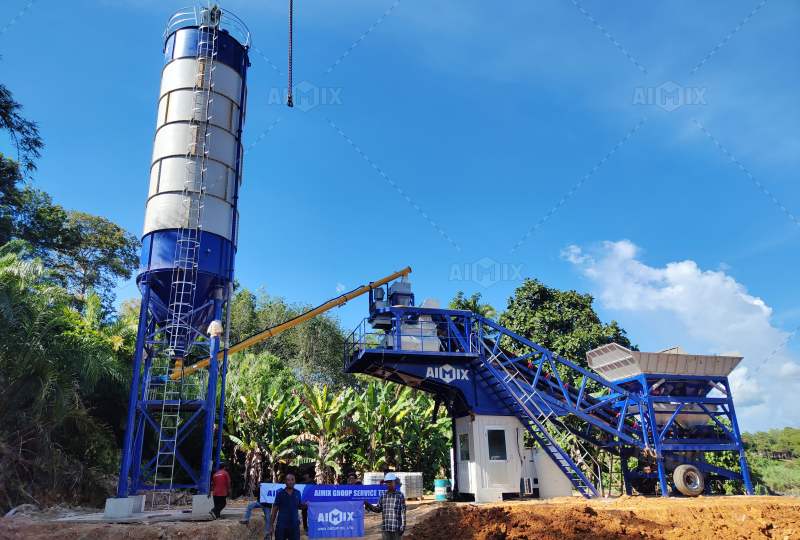
On-Site Installation: Speed and Simplicity
Once the plant arrives at the construction site, installation is significantly faster compared to traditional systems. Most mobile batching plants are pre-assembled or semi-assembled, requiring minimal foundation work. In many cases, they can be operational within a few days.
This rapid deployment is especially valuable in time-sensitive projects such as highway construction, bridge rehabilitation, airport expansion, and emergency infrastructure repair. Contractors can immediately begin concrete production without relying on external suppliers, improving schedule control and reducing logistical delays.
The simplified installation process also reduces labor costs and technical complexity, making mobile systems suitable for both large contractors and mid-sized construction companies.
Smart Control Systems and Operational Efficiency
Modern mobile batching plants are equipped with intelligent control systems that automate the entire production process. These systems manage material weighing, mixing time, moisture compensation, and discharge control with high precision.
Automation reduces human error and ensures consistent concrete quality across batches. Operators can monitor production data in real time through digital interfaces, allowing for quick adjustments and improved material efficiency.
Some advanced systems even support remote monitoring and cloud-based data management. This enables contractors to oversee multiple job sites from a central location, improving coordination and reducing operational risks.
Energy-efficient motors and optimized mixing technology also contribute to lower operational costs, making mobile plants not only flexible but also economically efficient over the long term.
Cost Efficiency and Investment Value
From an investment perspective, mobile batching plants offer strong cost advantages. They eliminate the need for large civil foundation works and reduce installation time, significantly lowering initial setup costs.
Additionally, their ability to move between multiple projects increases equipment utilization rates. Instead of purchasing multiple stationary plants for different sites, contractors can use a single mobile system across several projects, maximizing return on investment.
Maintenance costs are also reduced due to modular design. Individual components can be replaced or upgraded without dismantling the entire system, improving long-term operational efficiency.
Conclusion
From factory engineering to global delivery and on-site operation, mobile concrete batching plant manufacturers provide complete solutions that redefine modern concrete production. Their ability to design portable, automated, and efficient systems has transformed how construction projects are executed worldwide.
Markets such as the mobile concrete batching plant Philippies, mobile concrete batching plant South Africa, and mobile concrete batching plant Australia demonstrate the global importance of mobility in construction equipment. As infrastructure demands continue to grow, mobile batching plants will remain a key driver of efficiency, flexibility, and cost optimization in the global construction industry.