
Steel stockyards are among the most demanding environments for material handling equipment. Massive steel coils, billets, pipes, plates, and structural sections are stored in dense layouts, often requiring frequent movement and stacking operations. In these facilities, Rubber Tyred Gantry (RTG) cranes play a critical role in transporting heavy loads efficiently across the yard. However, the combination of large equipment, limited visibility, moving vehicles, and congested storage areas creates significant safety challenges.
One of the most critical concerns in steel stockyards is the risk of collisions caused by blind spots and limited operator visibility. A collision involving a rubber tired gantry crane can result in equipment damage, production downtime, material loss, and serious injury. Therefore, implementing advanced collision avoidance technologies and blind spot management solutions is essential for maximizing operational safety.
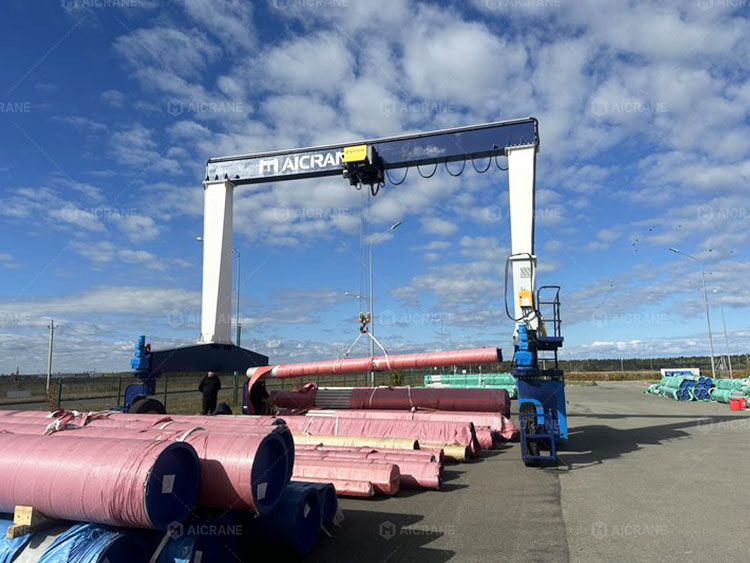
Understanding Collision Risks in Steel Stockyards
Unlike container terminals, steel stockyards often feature irregular load shapes and varying storage configurations. Operators must handle:
- Steel coils stored in multiple layers
- Long steel pipes and beams
- Heavy steel plates
- Fabricated steel structures
- Oversized industrial components
These materials can obstruct visibility and create hidden hazards throughout the work area.
Several factors contribute to collision risks:
Complex Traffic Patterns
RTG cranes frequently share operating areas with:
- Forklifts
- Reach stackers
- Trucks
- Transfer carts
- Maintenance vehicles
- Pedestrian workers
The movement of multiple machines within limited spaces increases the possibility of accidental contact.
Large Crane Dimensions
A steel yard RTG mobile gantry crane may have:
- Wide spans
- High lifting capacities
- Long wheelbases
- Elevated operator cabins
While these features improve lifting capability, they also create significant blind spots around the crane structure.
Obstructed Sight Lines
Stored steel products often block the operator’s direct view of:
- Ground personnel
- Vehicles
- Adjacent equipment
- Yard obstacles
This issue becomes even more pronounced during night operations or adverse weather conditions.
Common Blind Spot Areas on RTG Cranes
Understanding where blind spots occur is the first step toward reducing collision risks.
Front Lower Blind Zone
The area directly beneath the crane’s front structure is often invisible to operators, especially when carrying large loads.
Potential hazards include:
- Workers entering restricted zones
- Small vehicles
- Material stacks
- Ground obstacles
Rear Travel Area
When reversing, operators may have limited visibility behind the crane.
Risks include:
- Vehicle collisions
- Contact with storage racks
- Impact with other cranes
Side Blind Spots
The crane’s legs, support structures, and machinery housing can block visibility along both sides.
This becomes dangerous when forklifts or trucks operate nearby.
Load-Induced Blind Spots
Large steel coils, steel plates, or fabricated structures suspended beneath the crane can block the operator’s field of view entirely.
In some cases, operators may be unable to see the landing area without assistance.
The Importance of Collision Avoidance Systems
Modern RTG cranes increasingly incorporate intelligent collision avoidance systems designed to detect hazards before accidents occur.
These systems provide multiple layers of protection beyond human observation.
Key objectives include:
- Preventing crane-to-crane collisions
- Preventing crane-to-vehicle collisions
- Preventing crane-to-obstacle impacts
- Protecting personnel
- Reducing equipment damage
- Improving operational efficiency
For steel stockyards handling high-value materials, these benefits can significantly reduce operational risks and maintenance costs.
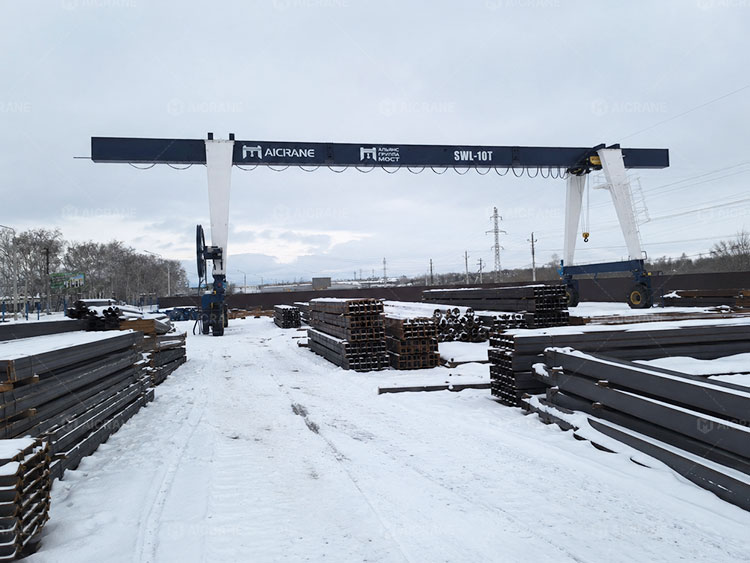
Radar-Based Obstacle Detection
Radar technology has become one of the most reliable solutions for RTG collision prevention.
Radar sensors continuously monitor areas around the crane and detect objects regardless of:
- Dust
- Fog
- Rain
- Low-light conditions
Advantages include:
Long Detection Range
Radar can identify potential obstacles well before they enter dangerous proximity.
This provides operators with additional reaction time.
Reliable Performance in Harsh Conditions
Steel yards often experience:
- Dust accumulation
- Temperature fluctuations
- Heavy rain
- Snow
Radar maintains consistent performance in these environments.
Automatic Warning Generation
When an obstacle enters a predefined safety zone, the system can:
- Trigger alarms
- Display warnings
- Reduce travel speed
- Stop crane movement automatically
Laser Scanning Systems
Laser scanners provide highly accurate area monitoring around RTG cranes.
These systems create a virtual safety perimeter that continuously detects objects within designated zones.
Benefits include:
- High positioning accuracy
- Real-time monitoring
- Adjustable protection zones
- Integration with crane control systems
Laser scanners are particularly effective for detecting:
- Personnel
- Small vehicles
- Unexpected obstacles
This makes them an excellent complement to radar-based systems.
360-Degree Camera Monitoring
Video monitoring systems significantly improve operator awareness.
Modern RTG cranes often utilize multiple high-definition cameras positioned around the crane structure.
Typical camera locations include:
- Front beam
- Rear beam
- Crane legs
- Trolley area
- Hoist system
- Travel mechanisms
The camera feeds are combined into a centralized operator display, creating a comprehensive view of surrounding activities.
Advantages include:
Improved Situational Awareness
Operators can monitor blind spots without relying solely on mirrors or spotters.
Enhanced Load Positioning
Cameras help operators accurately place steel products during stacking and retrieval operations.
Incident Investigation Support
Recorded footage can assist in analyzing safety incidents and improving operational procedures.
AI-Powered Vision Systems
Artificial intelligence is introducing a new generation of safety technologies for RTG cranes.
AI-based vision systems can automatically identify:
- Pedestrians
- Vehicles
- Equipment
- Storage obstacles
Unlike traditional cameras, AI systems actively analyze images rather than simply displaying them.
Features may include:
- Human detection
- Vehicle classification
- Path prediction
- Hazard alerts
- Automated emergency response
These systems help reduce dependence on operator judgment alone.
Crane-to-Crane Anti-Collision Systems
Many steel stockyards operate multiple RTG cranes within the same yard.
Without proper coordination, crane-to-crane collisions can occur due to:
- Simultaneous travel
- Operator error
- Communication failures
- Visibility limitations
Anti-collision systems use:
- GPS positioning
- Laser ranging
- Radar sensors
- Wireless communication
to continuously track crane locations.
When two cranes approach predefined safety limits, the system can:
- Generate warnings
- Restrict travel speed
- Automatically stop movement
This significantly reduces collision risks in multi-crane environments.
Personnel Protection Solutions
Protecting workers remains the highest safety priority.
Modern RTG safety systems increasingly focus on pedestrian detection and exclusion zone management.
Geofencing Technology
Virtual boundaries can be established around crane operating areas.
When unauthorized personnel enter restricted zones:
- Visual warnings activate
- Audible alarms sound
- Crane movement can be restricted
Wearable Safety Devices
Some facilities equip workers with:
- RFID tags
- Ultra-wideband (UWB) transmitters
- Smart helmets
These devices communicate with the crane’s safety system and provide precise worker location tracking.
The crane can automatically slow down or stop when personnel approach hazardous areas.
Blind Spot Reduction Through Crane Design
In addition to electronic systems, gantry crane manufacturers can improve safety through structural design optimization.
Design improvements may include:
Elevated Visibility Cabins
Strategically positioned cabins provide broader sight lines across the yard.
Larger Glass Areas
Expanded window coverage improves operator visibility in multiple directions.
Transparent Floor Sections
Glass floor panels help operators view areas directly below the cabin.
Optimized Structural Layout
Reducing visual obstructions created by support members can minimize blind zones.
These improvements enhance the effectiveness of both operators and safety technologies.
Operational Best Practices for Collision Prevention
Technology alone cannot eliminate all risks. Effective safety management requires proper operating procedures.
Recommended practices include:
Regular Safety Inspections
Inspect:
- Sensors
- Cameras
- Warning devices
- Emergency stop systems
- Communication equipment
Routine maintenance ensures reliable performance.
Operator Training
Operators should receive ongoing training covering:
- Blind spot awareness
- Collision avoidance procedures
- Emergency response protocols
- Equipment limitations
Well-trained operators remain a critical part of any safety strategy.
Traffic Management Plans
Clearly defined traffic routes help separate:
- RTG crane travel paths
- Vehicle movement areas
- Pedestrian walkways
Proper traffic organization significantly reduces accident potential.
Communication Protocols
Reliable communication between operators, supervisors, and ground personnel helps prevent misunderstandings that could lead to dangerous situations.
Future Trends in RTG Safety Technology
As Industry 4.0 technologies continue to evolve, steel stockyards are moving toward increasingly intelligent crane operations.
Emerging developments include:
- Autonomous RTG navigation
- Digital twin monitoring systems
- Predictive collision avoidance algorithms
- Vehicle-to-crane communication networks
- Real-time yard traffic management systems
- Advanced AI-powered safety analytics
These innovations will further improve operational safety while increasing productivity and reducing human error.
Conclusion
Steel stockyards present unique safety challenges due to heavy materials, dense storage layouts, mixed traffic environments, and limited visibility. Blind spots and collision risks remain among the most significant concerns for RTG crane operations. By combining advanced technologies such as radar sensors, laser scanners, AI-powered vision systems, 360-degree cameras, crane-to-crane anti-collision systems, and personnel detection solutions, operators can dramatically reduce accident risks and improve workplace safety.
In addition to technology investments, proper crane design, operator training, traffic management, and routine maintenance are essential components of a comprehensive safety strategy. As automation and intelligent monitoring systems continue to advance, RTG cranes will become even safer and more efficient, helping steel stockyards achieve higher productivity while protecting personnel, equipment, and valuable steel products.